Tuesday, March 31, 2009

Scarlet-Heeled Art Work

Who wouldn’t want to wear Christian Louboutin’s scarlet heeled art on their feet? His art work as shoes is so sexy. I love them. I want my own pair.

Tuesday, March 17, 2009

Daddy


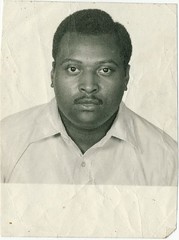
Daddy
Originally uploaded by goodgirlkmj.
The First Man to love me completely.
My Daddy.

He loved me unconditionally and he taught me how to love others.
My Daddy.

When he first saw me, he loved me flaws and all.
My Daddy.

He saw all of the potential God put inside of me.
My Daddy.

He loved me.
My Daddy.

The first idea of what a man is and should be was my Daddy.
He wasn't perfect, but he's the perfect Daddy for me.

My Daddy.

Friday, March 6, 2009

Check out my Facebook profile

facebook
Keala Brown
Keala Brown has:
212 friends
19 photos
30 notes
100 wall posts
20 groups

Check out my Facebook profile


Hi Kealajacobs.love,

I set up a Facebook profile where I can post my pictures, videos and events and I want to add you as a friend so you can see it. First, you need to join Facebook! Once you join, you can also create your own profile.

----------
Come join facebook with me.
----------

Thanks,
Keala

To sign up for Facebook, follow the link below:
http://www.facebook.com/p.php?i=728840469&k=5VGUPY54TYZM5FAEQ14YW3&r
This e-mail may contain promotional materials. If you do not wish to receive future commercial mailings from Facebook, please opt out. Facebook's offices are located at 156 University Ave., Palo Alto, CA 94301.

Tuesday, February 17, 2009

PictureMail

Tuesday, February 10, 2009

Repost Thanks to Chris & Rihanna

The recent alleged incident involving Chris Brown and Rihanna prompted me to repost the “Signs to Look for in a Battering Personality.” If you or someone you know is involved in a relationship with a battering personality, please seek help.

Signs to Look for in a Battering Personality.
Many people are interested in ways to predict whether they are becoming involved with someone who might be physically abusive. Below is a list of behaviors that are seen in abusive people; the last four behaviors (16-19) are almost always indicators that a person is a batterer. If the person has several of the other behaviors, there is a strong potential for physical violence.The more signs a person has, the more likely they are a batterer. In some cases a batterer may have only a couple of very exaggerated behaviors (e.g., extreme jealousy over ridiculous things). Initially, the batterer will try to explain the behavior as a sign of love and concern, and you may be flattered at first; as time goes on, the behaviors become more severe and serve to dominate and control. FBI statistics show that 95% of all domestic violence is male violence against women.

  1. Jealousy: At the beginning of a relationship, an abuser will usually say jealousy is a sign of love; jealousy has nothing to do with love. It is a sign of insecurity and possessiveness. A jealous person will question you about who you talk to, accuse you of flirting or be jealous of the time you spend with family, friends or children (anyone but them). As jealousy escalates, the person may call frequently during the day or drop by unexpectedly. A jealous person may refuse to let you work for fear you will meet someone else or may exhibit strange behaviors such as checking the mileage on your car or asking friends to watch you.
  2. Controlling Behaviors: At first, a batterer may explain controlling behavior as concern for your safety, your need to use your time well or your need to make good decisions. An abuser will be angry if you are “late” returning from the store or an appointment and may question you closely about where you went and
    who you talked to. As the controlling behavior escalates, an abuser may try to control your personal decision about your home, clothing, religious choices and money. Some abusers may try to require you to
    ask permission to leave the room or the house.
  3. Quick Involvement: Many people in abusive relationships dated or knew their batterer for less than six months before they were engaged or living together. A batterer may come on like a whirlwind, “You’re the only person I could ever talk to.” or “I’ve never felt loved like this before.” A batterer needs
    someone desperately and may pressure you to commit.
  4. Unrealistic Expectations: Batterers are very dependent on others for all of their needs. A batterer may expect a partner to be a perfect mate, parent, lover and friend. A batterer may say things like, “If you love me, I’m all you need.” You are supposed to take care of everything for the batterer, emotionally and in the home. Generally, batterers are unable to tolerate frustration.
  5. Isolation: A batterer will try to cut you off from all resources. If you have close friends, a batterer may make disparaging, gender specific remarks about them or disparaging remarks about your family ties. A batterer may accuse people who support you of “causing trouble.” A batterer may want to live in the
    country without a phone, not let you use the car, or try to keep you from working or going to school.
  6. Blames Others for Personal Problems: If a batterer is chronically unemployed, someone else is always doing the batterer wrong or “out to get them.” A batterer may make mistakes and blame you for causing them. A batterer may blame or fault you for almost anything that goes wrong.
  7. Blames Others for Personal Feelings: A batterer may say “You make me mad.” “You’re hurting me by not doing what I ask.” or “I can’t help being this mad.” Each of us may our own decisions about how we think and feel, but a batterer will use feelings to manipulate you. Harder to catch are claims like “You make me happy.”
  8. Hypersensitivity: A batterer is easily insulted, claiming “hurt” feelings when really feeling very mad or may take the slightest set-back as a personal attack. A batterer will rant and rave about the injustice of things that have happened—things that are really just a part of living, i.e., being asked to work overtime, getting a traffic ticket, being told that a personal habit is annoying or being asked to help with chores.
  9. Cruelty to Children and/or Animals: Batterers may punish (take power over) children and/or animals brutally or be insensitive to their pain or suffering. A batterer may expect children to be capable of doing things far beyond their ability (spank a two year old for wetting a diaper) or may tease children or young brothers or sisters until they cry. A large percentage of batterers who beat an adult partner also beat their children. A batterer may not want children to eat at the table or expect them to stay in their
    room all evening (stay out of the way).
  10. “Playful” Use of Force in Sex: Some batterers like to overpower their partner, holding them down during sex, or act out fantasies during sex while the partner is helpless (i.e., rape is exciting). A batterer may show little concern about whether a partner wants to have sex and uses sulking or anger to manipulate a partner’s compliance. A batterer may start having sex while a partner is sleeping, or demand sex when a partner is tired or ill.
  11. Verbal Abuse: In addition to saying things that are meant to be cruel and hurtful, verbal abuse can be gender degrading, cursing, running down accomplishments. An abuser may say a partner is stupid and unable to function alone; sometimes waking the partner from sleep to verbally abuse or not allowing sleep.
  12. Rigid Sex Roles: Batterers expect to be served; may require a partner’s presence in the home at all times; expect to be obeyed in all things – even things that are criminal in nature. An abuser believes is gender superiority.
  13. Dr. Jeckyll/Mr. Hyde: Many people are confused by the abuser’s “sudden” mood changes – they will describe that one minute the abuser is nice and the next, exhibits explosive anger. They think the abuser has some “mental problem” or is “crazy.” Explosive anger and mood swings are typical of batterers and these behaviors are related to other characteristics such as hypersensitivity and violent temper.
  14. A History of Abuse: Having been abused physically or sexually as a child or having witnessed abuse of a mother by a father, does not necessarily make a person a batterer. But it does provide a model of unequal power and violence as a means of solving problems. It is the one common piece of history for all batterers…they have seen the battery of their mothers when they were young.
  15. Substance Abuse: Heavy drinking or drug use are often correlated with domestic violence. These are not the cause of battering, but abusers sometimes excuse their behavior by saying, “I was drunk, I didn’t know what I was doing.”
  16. Past Battering: A batterer may admit battering in the past, but someone else was at fault. You may hear from relatives or ex-spouses that your partner is abusive. A batterer will beat any person they
    become intimate with. The circumstances of any situation do not cause battering.
  17. Threats of Violence: This includes any threat of physical force meant to control you. “I’ll slap your mouth,” “I’ll kill you.” or “I’ll break your neck.” In reasonable relationships, partners to not threaten each other. A batterer will try to excuse this behavior by saying “Everybody talks this way.”
  18. Breaking or Striking Objects: This behavior may be used as a punishment (breaking loved possessions), but is mostly used to terrorize you into submission. The batterer may beat on tables or walls; throw objects at or near you. Again, this is a very significant behavior; only immature people beat on object in
    the presence of others in order to threaten them.
  19. Any Force Used During an Argument: This may involve holding you down, physically restraining you from leaving the room and any pushing or shoving. (An abuser may hold you against a wall and say, “You’re going to listen to me.”

My Heart

has always had a soft spot for abused women. I’m not sure if it was because my grandmother was abused or because I’ve always known how wrong abuse is.

Although my former abuser would like to deny, forget, excuse, or even justify his abuse towards me, I cannot act as if it never happened. This does not mean that I do not forgive him because I do. I forgive him because forgiveness is so important to a peaceful life.

I adopted this goal because it has always been on my heart to do so. The recent news about Chris Brown and Rihanna reminded me about this very important topic.

Sunday, February 8, 2009

How can we all live well and live within the means of one planet?

If everyone lived the lifestyle of the average American we would need five planets.

I thought I would start with me. What am I doing to contribute to the problem? What can I do to help solve the problem?

My global footprint is 4. What’s yours?

Related Posts with 

Thumbnails